
Tyre pyrolysis plant for scrap and OTR tyres
A tyre pyrolysis line converts scrap car, truck and OTR tyres into fuel oil, pyrolysis carbon black, steel wire and combustible gas. Tyres are self-lubricating in the reactor but bring steel and high bulk density — the feeding, discharge and steel handling are what make or break a tyre line. One thing to settle first: only the batch configuration takes whole tyres or switches between waste streams.
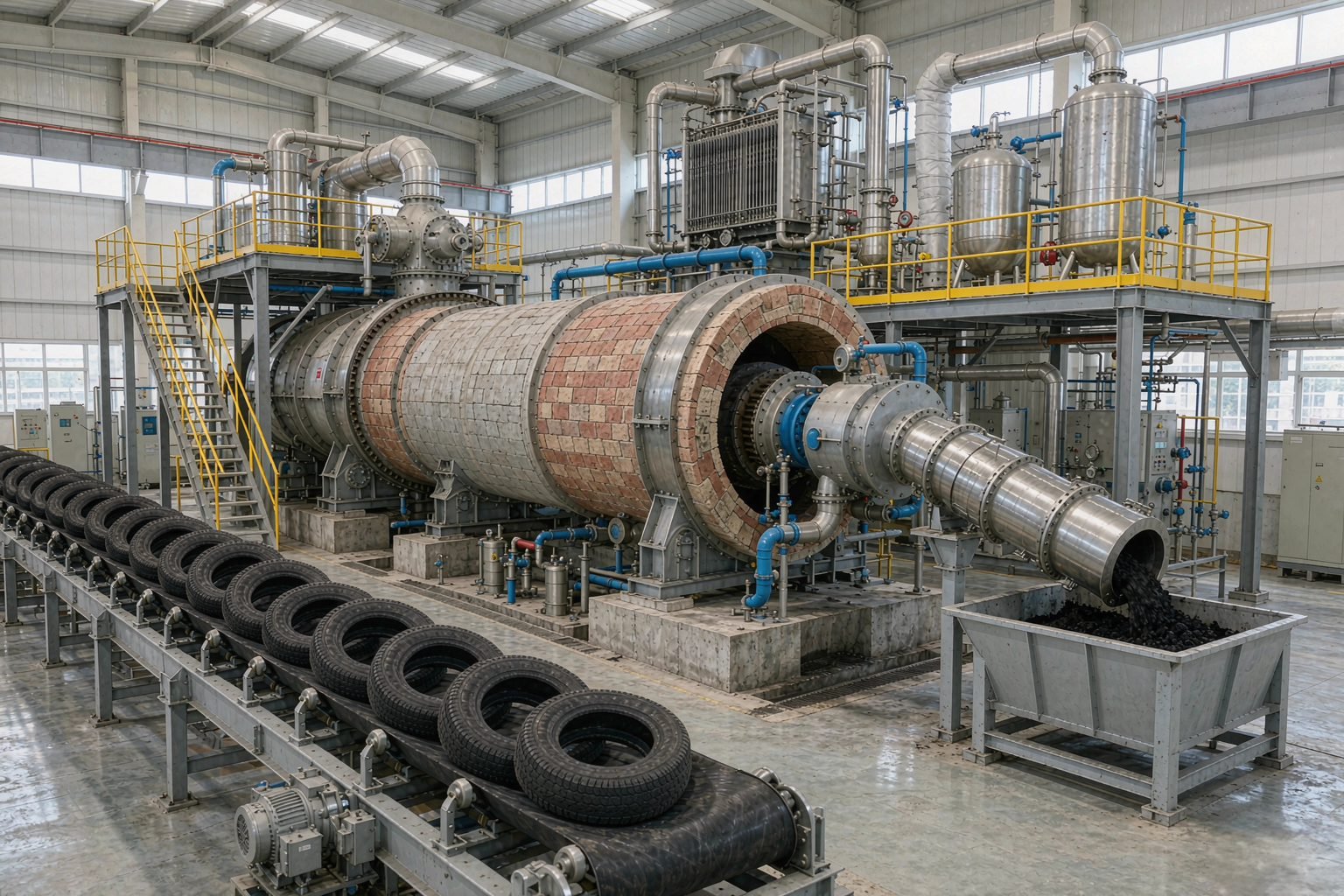
Scrap car / truck / OTR tyres
Whole tyres, or pre-processed tyre / rubber powder
Batch / semi-continuous / continuous
Fuel oil, carbon black, steel, gas
What the plant processes
Tyres pyrolyse well — the rubber yields oil and the steel comes out clean. The boundary is material condition, not rubber type.
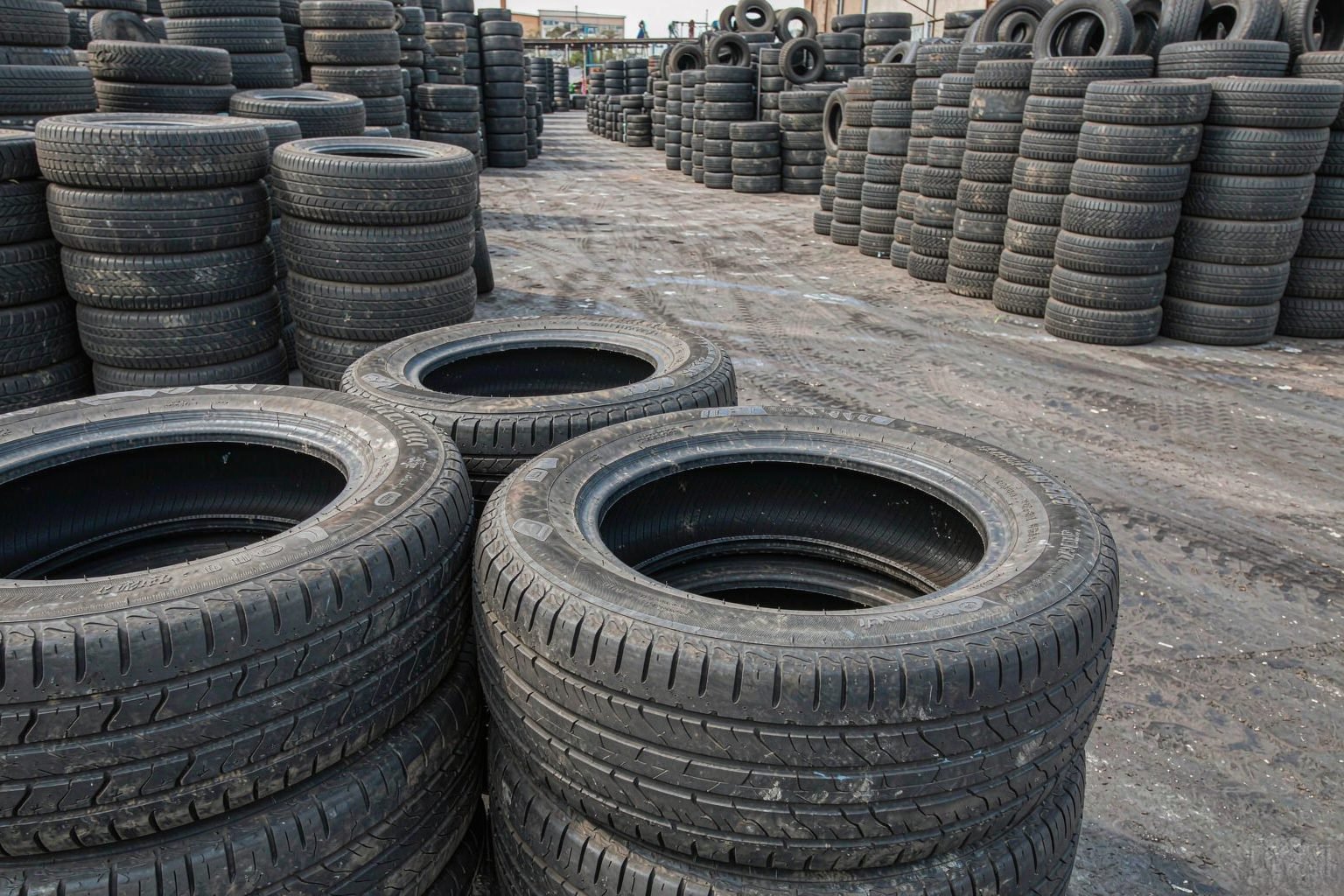
Suitable feedstock
- Whole scrap car and truck tyres
- Shredded tyre rubber (2T or whole tyre feeding, per configuration)
- OTR and large tyres — with the pre-cutting equipment sized for them
- Steel-belted and radial tyres (steel handled at discharge)
- Mixed tyre streams with moderate mud — after draining and drying
Not suitable without pre-treatment
- Waterlogged, mud-filled tyres — must be drained and dried first
- Tyres mixed with large metal debris beyond the beads
- Solid rubber blocks and large OTR tyres on a line without cutting equipment
- Tyres still on rims — rims are removed before feeding
- Heavy contamination with sand or stones — accelerates reactor wear
Three configurations — and only one of them takes whole tyres
The choice is driven by your tonnage, but the harder constraint is what the machine can physically accept. Semi-continuous and continuous lines run on a metered feed of pre-processed tyre powder or rubber powder: they cannot take whole tyres, and they cannot be switched over to run other waste streams. The batch reactor is the flexible configuration.
Batch
Semi-continuous
Continuous
Optional configuration for a tyre line
The reactor, condenser train and discharge system are standard on every line. These two options change how much labour the plant needs and how the tyres are prepared before charging.
Automatic feeding machine
Feeds the reactor mechanically instead of by hand. Cuts the crew needed per shift and keeps every charge consistent — the usual choice once a batch plant runs more than one shift.
Tyre cutting machine
Cuts whole tyres into sections before charging. We recommend cutting even on batch operation: cut tyres pack denser in the reactor, heat through faster and discharge more cleanly at the end of the cycle.
From scrap yard to stored oil
Six stages, each with its own control point. Steel handling and carbon black discharge are where a low-cost tyre line usually differs from a workable one.
01
Feeding
02
Heating & pyrolysis
03
Vapour transfer
04
Condensation
05
Oil collection
06
Discharge
Four products leave a tyre line
Fuel oil
The main revenue stream. Sold as industrial fuel, or upgraded further in our distillation unit.
Pyrolysis carbon black
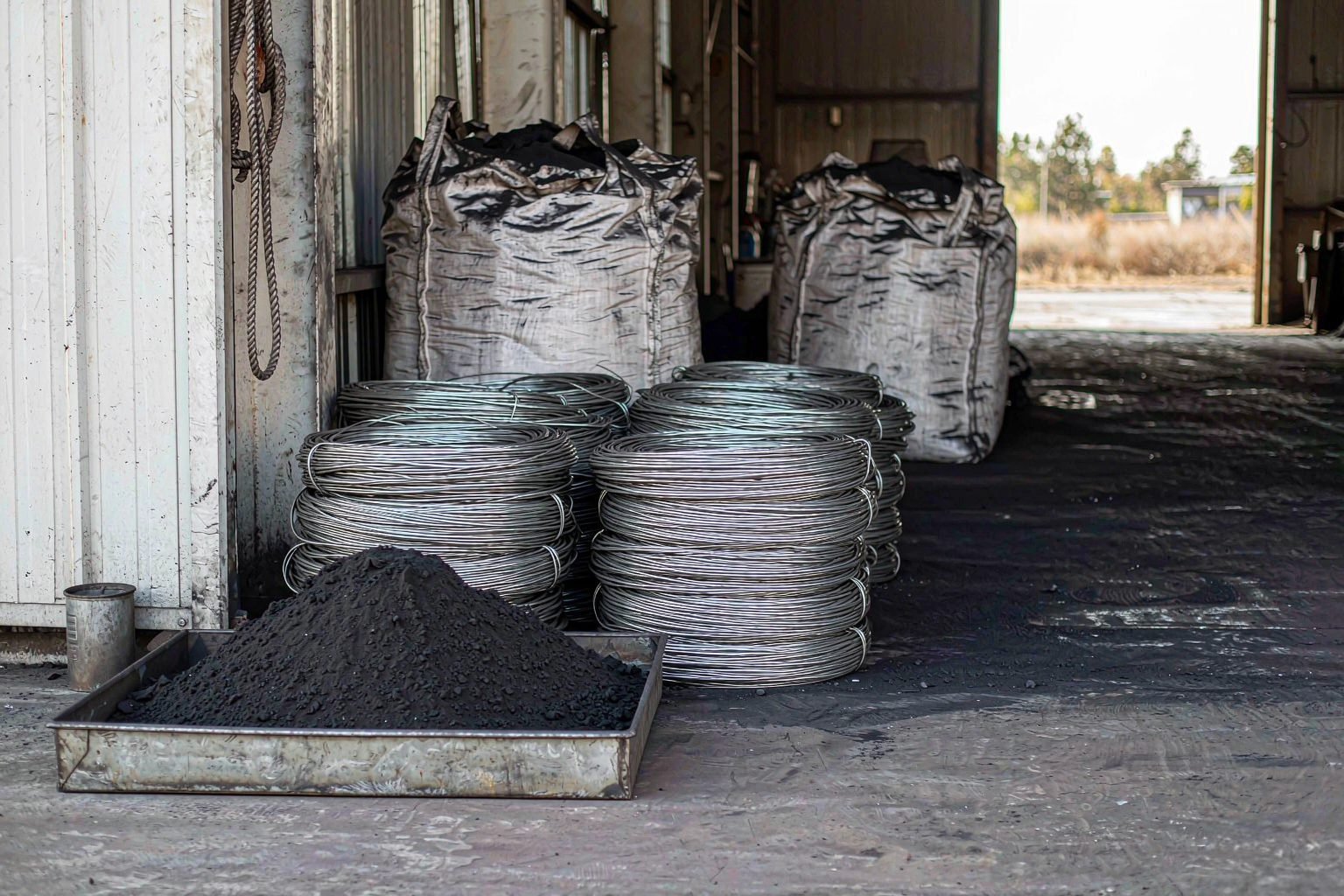
Discharged as powder or granule. Sold as filler or fuel, or briquetted for easier handling.
Steel wire
Beads and belts come out of the reactor and are separated for sale to steel recyclers.
Combustible gas
Returned to the burner to heat the reactor, reducing external fuel consumption.
Specification sheet
Values that depend on the project are marked as such rather than filled with a generic figure. The signed technical offer carries the numbers for your line.
| Reactor material | Carbon steel with refractory lining; stainless option on request |
|---|---|
| Operating pressure | Atmospheric to slight negative pressure |
| Heating method | External burner, fuel oil or gas fired |
| Cooling | Water-cooled condenser train |
| Feed preparation | Whole tyres for the batch configuration; pre-processed tyre powder or rubber powder for semi-continuous and continuous. Tyre cutting machine and automatic feeding machine optional. |
| Daily capacity | Set per project within the 1–30 TPD range |
| Oil yield basis | Stated per project after tyre sample assessment |
| Steel handling | Bead wire removal and discharge, sized to tyre type |
| Emission control | Scrubber and flue treatment sized to local limits |
| Power & site | Specified from site conditions; layout issued with the proposal |
| Warranty | Per contract terms |
Send your tyre stream data
What surrounds the reactor decides how well the line runs
The reactor is the visible part. Tyre feeding, steel discharge, dust removal and gas handling determine uptime, carbon black quality and whether the site can be permitted.
- Tyre feeding system — whole-tyre charger or shredder plus screw feeder
- Catalytic tower and dust removal stage
- Water-cooled condenser train and oil-water separator
- Oil storage tanks and transfer pump
- Carbon black screw discharge, collection and (optional) briquetting
- Steel wire separation and collection
- Flue gas scrubber and induced draft fan
- Control cabinet with temperature and pressure interlocks
Environmental scope
- Flue gas scrubbing before stack
- Vapour recovery on the oil side
- Wastewater collection and separation
- Dust control at feeding and discharge
Permitting is a local process. We prepare the technical documentation your authority asks for; we do not issue permits or guarantee an approval.
Explore the related equipment
Four lines cover the waste-to-oil range. Open the one that matches your feedstock — each page carries the process, specification and enquiry form.
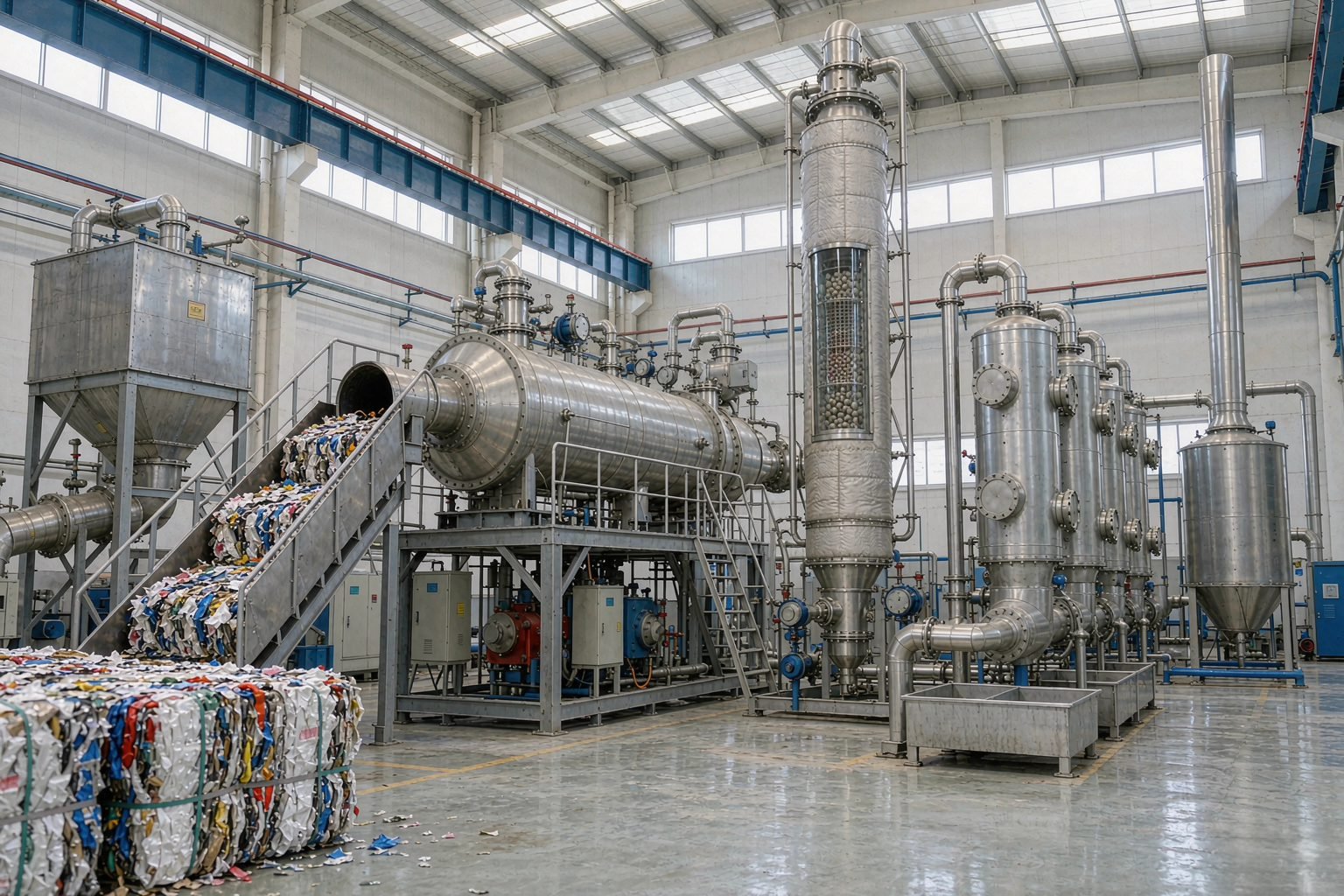
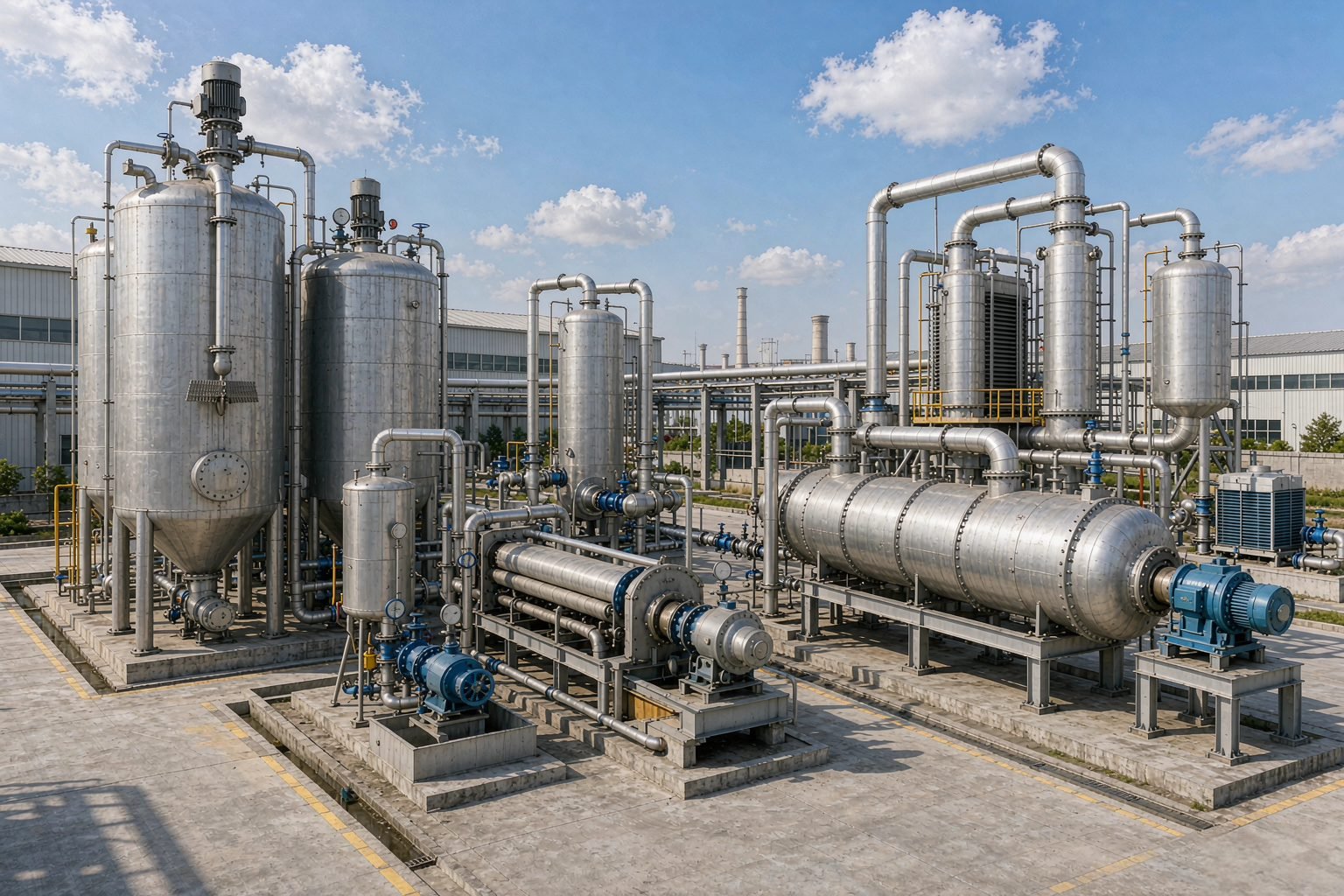
Oil sludge pyrolysis plant
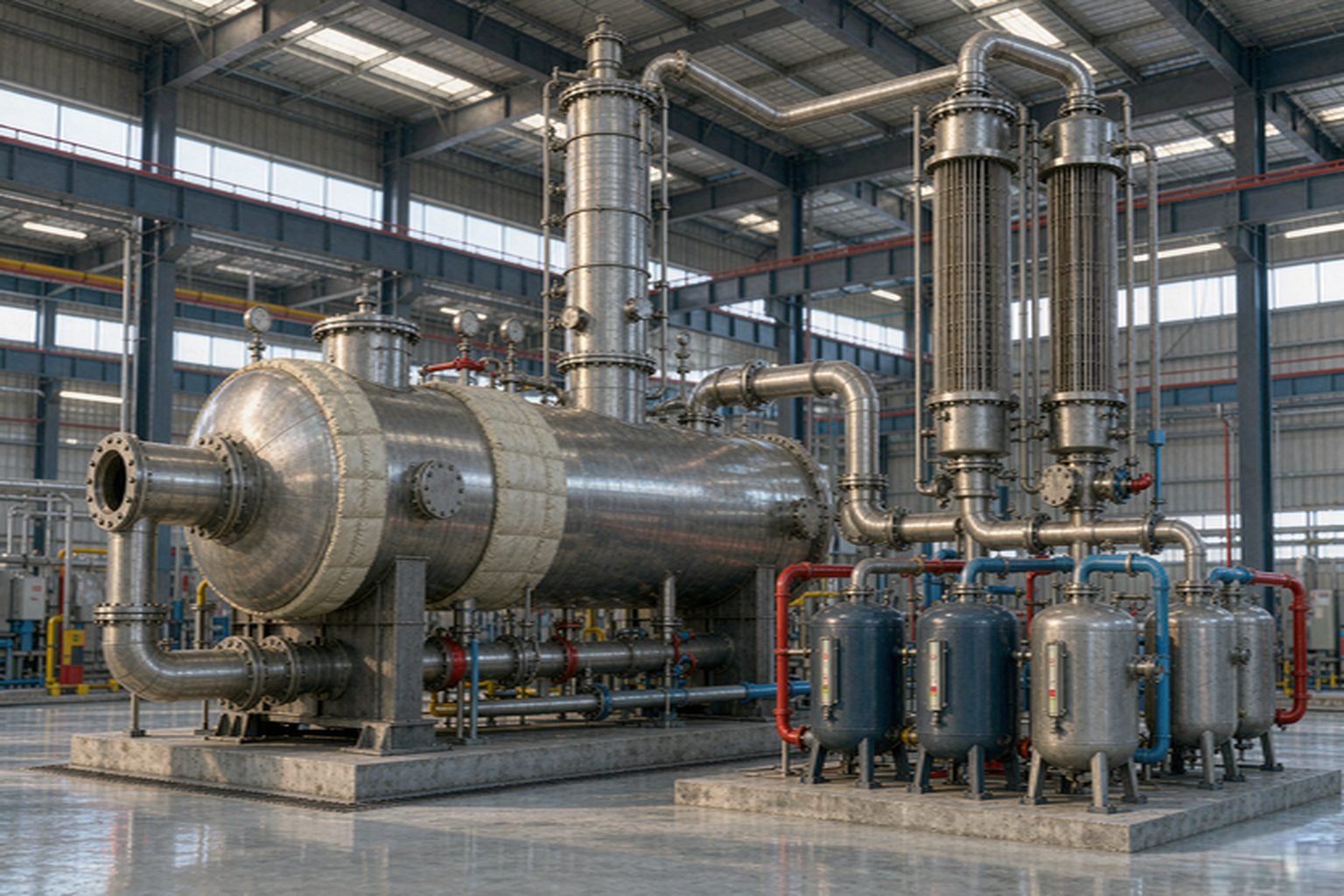
Waste oil distillation plant
A reference is only useful if it matches your feedstock
Tell us the tyre type and the tonnage. We will send the tyre projects that actually match — with capacity, commissioning date and the site you can contact — instead of a gallery of unrelated installations.
Before you order
It depends on tyre type and moisture — car, truck and OTR tyres differ. We state a range with the calculation basis in the proposal rather than a single marketing figure.
No. Both are built around a metered feed of pre-processed tyre powder or rubber powder — whole tyres will not feed, and the line cannot be switched to plastic or oil sludge. If you need one plant for several waste streams, the batch configuration is the one to look at.
It is not mandatory — a batch reactor takes whole tyres — but we recommend a simple cut. Cut tyres pack denser, heat through faster and discharge cleanly, and the tyre cutting machine pays for itself in cycle time.
Bead and belt steel comes out of the reactor with the carbon black and is separated at discharge. It is clean enough to sell to steel recyclers; the collection system is part of the line.
Only the batch configuration can. Feeding, discharge and condensation need different sizing for each material, and semi-continuous or continuous lines are locked to powder feed. We configure the line for the dominant feedstock and state what changes if you switch.
Price follows the configuration — batch or continuous, capacity, steel handling and the emission package your site needs. We quote against your tonnage and site, not a catalogue number.
Still deciding?
Send the tyre type and the tonnage
Four inputs are enough for us to size a tyre line and quote: tyre type, target tonnes per day, site location and power supply.
- Tyre sample / stream assessment
- Capacity and yield basis
- Layout and delivery terms